Xander Vogel · 27 September 2026
Collaborative Efforts in Polish Academia Push Boundaries of Ethical Artificial Intelligence and Quantum Environmental Detection
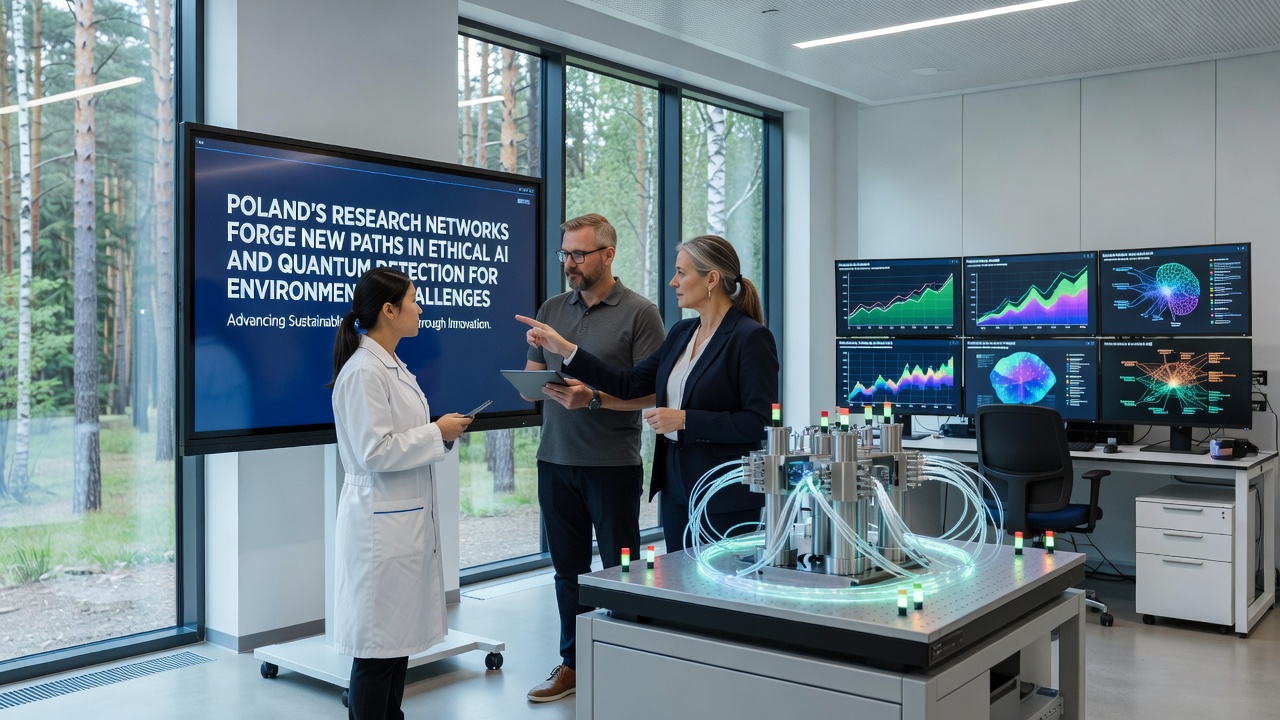
Poland's research institutions have formed extensive networks that combine expertise from multiple universities and government-backed centers to develop ethical guidelines for artificial intelligence while advancing quantum detection methods aimed at environmental monitoring, and these efforts gained momentum through coordinated projects launched in 2024 that continue into 2026.
Building Ethical Foundations for AI Applications
Researchers across Polish consortia have established protocols that embed transparency and accountability into AI systems used for data analysis in climate studies, with the European Commission providing foundational references through its documentation on trustworthy artificial intelligence practices. Teams at institutions in Warsaw and Krakow coordinate with international partners to test bias mitigation techniques in machine learning models that process satellite imagery for deforestation tracking, and data from these trials show reduced error rates in predictive outputs when ethical review stages are integrated early in development cycles.
Workshops held throughout 2025 focused on aligning national standards with broader EU directives, which allowed Polish groups to contribute case studies on responsible data sharing in multi-institutional environments. Observers note that such alignment supports consistent evaluation metrics across projects involving environmental sensors, where AI algorithms must handle variable inputs from diverse geographic regions without introducing unintended skews.
Quantum Detection Technologies Target Environmental Monitoring
Quantum sensors developed through these networks offer enhanced precision in measuring atmospheric gases and soil composition changes, enabling earlier identification of pollution patterns in industrial zones and agricultural areas. Polish teams integrate these devices with AI processing units that interpret quantum state variations in real time, producing datasets that inform policy decisions on emission reductions.
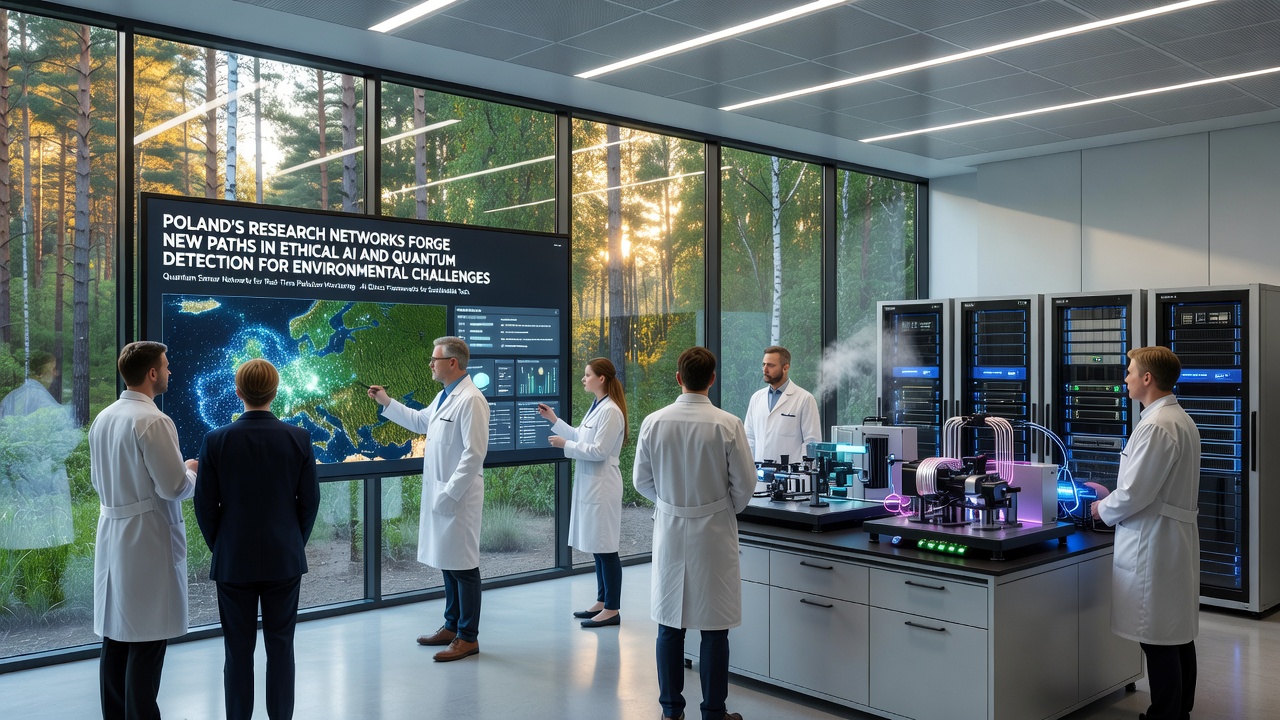
By September 2026, several field deployments are scheduled to expand testing of portable quantum units in the Carpathian region, where they will collect continuous readings on methane levels while AI components flag anomalies against historical baselines. Studies indicate that this combination reduces the time required to validate environmental shifts compared with conventional instrumentation alone, although calibration remains an ongoing focus for network participants.
Network Structures and Cross-Institutional Coordination
Poland's approach relies on distributed research clusters that link technical universities with environmental agencies, creating pathways for shared resources and joint publications. These structures facilitate knowledge transfer on topics such as quantum error correction applied to field sensors and ethical review boards that assess AI deployment risks before projects scale.
One initiative pairs quantum physicists from Gdansk with data ethicists in Wroclaw to examine how detection systems can operate within regulatory boundaries set for sensitive ecological data, and preliminary reports highlight improved interoperability between hardware prototypes and software frameworks developed under these partnerships. External references from organizations like the National Research Council of Canada on quantum sensing applications in remote monitoring provide comparative benchmarks that Polish networks adapt to local conditions.
Future Milestones and Integration Challenges
Upcoming phases emphasize scaling these technologies while maintaining compliance with evolving ethical standards, including plans for open-access repositories that store anonymized datasets from quantum-AI hybrids. Network coordinators track progress through quarterly reviews that evaluate both technical performance and adherence to established oversight procedures.
Evidence from ongoing trials suggests that sustained collaboration yields incremental gains in sensor sensitivity and algorithmic fairness, supporting broader applications in water quality assessment and biodiversity mapping across Europe.
Conclusion
Poland's research networks continue to advance integrated solutions that pair ethical AI governance with quantum detection capabilities for environmental purposes, relying on structured partnerships and phased implementations that extend through 2026 and beyond. These activities draw on documented methodologies and cross-regional insights to address measurement and analysis needs in dynamic ecological contexts.